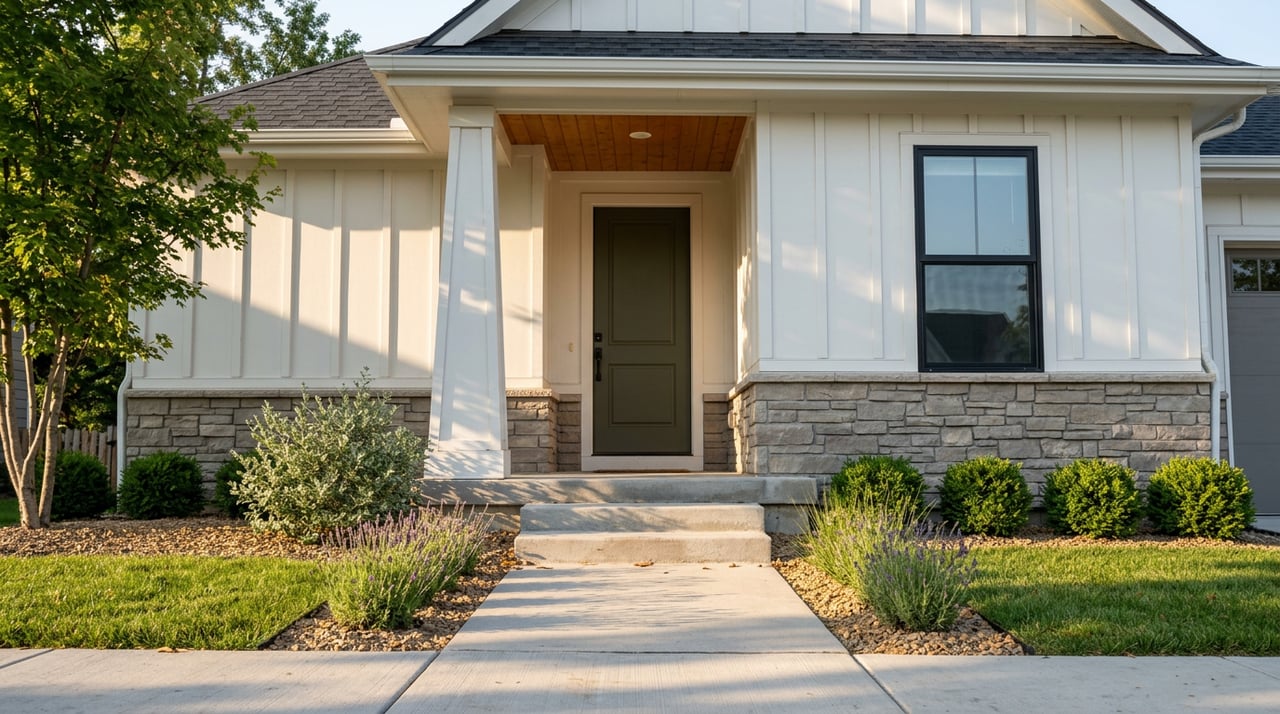
Every new-construction closing in Meridian ends the same way. Keys, a stack of paperwork, a builder walkthrough, maybe a bottle of champagne left on the counter. It feels finished. For property tax purposes, it isn't. The county hasn't even priced your home yet, and the deadline that actually matters for your first tax bill hasn't started running.
That's the piece most new-build buyers never hear until it's too late to fix. Ada County can't put a brand-new house on the tax roll the way it can a resale. It has to wait for your builder to report that the home is occupied, appraise it after the fact, then mail you a notice. Only then does your window to file for the homestead exemption open, and under Idaho Code 63-317, Ada County gives you 28 days from that notice to act. Miss it, and the exemption you were counting on doesn't just get delayed. It gets pushed to the following tax year entirely.
Why the Resale Playbook Doesn't Apply to Your New Build
If you've bought a resale home in Idaho before, you probably know the rule of thumb: own and occupy the home by the last business day in December, file with the assessor by that same day, and you're covered for the current tax year. That rule works because the home already exists on the county's books on January 1. The land and structure were assessed the year before, so all you're doing is attaching your ownership and occupancy to a value that's already on file.
A newly built home in Paloma Ridge, Pinnacle, Schafer View Terrace, or any of the master-planned communities orbiting the Village at Meridian doesn't have that history. On January 1 of the year you close, the county's roll may still show raw land or a partially finished structure. The house you're standing in doesn't officially exist for tax purposes until the county is notified it's occupied and appraises it accordingly. That notification typically comes from the builder, and the appraisal and resulting notice can land weeks or months after your actual move-in date.
This is the inversion that catches buyers off guard. You're not racing a calendar deadline you can mark in advance. You're waiting for a letter, and the clock doesn't start ticking until it arrives.
What Ada County's Own Language Says
Ada County's assessor's office spells out the mechanism plainly for anyone who occupies a new home after the first of the year: apply for the homestead exemption within 28 days of receiving the notice of assessment for the newly occupied dwelling, or the application gets considered for the following assessment year instead of the current one. That 28-day window comes directly from Idaho Code 63-317, the statute governing what the state calls occupancy tax procedures for newly constructed homes.
The practical risk isn't that buyers forget to file. It's that they don't know there's a second notice coming at all. They filed paperwork at closing, assume the exemption is handled, and stop watching the mail for anything from the county. When the notice of assessment shows up months later, unlabeled as anything time-sensitive on the outside of the envelope, it's easy to set aside.
| Resale home | New construction | |
|---|---|---|
| What starts the clock | Owning and occupying by the last business day in December | A notice of assessment mailed after the county appraises the finished, occupied home |
| Filing window | Same day, by close of business | 28 days from the date of the notice |
| What happens if you miss it | Exemption applies the following tax year | Exemption applies the following tax year |
The end result of missing either deadline looks the same on paper. The difference is that resale buyers can see their deadline coming on a calendar. New-construction buyers are waiting on a piece of county mail whose arrival date they don't control.
What's Actually at Stake in Dollars
Idaho's homestead exemption removes 50 percent of a home's assessed value from taxation, capped at $125,000, whichever amount is smaller. On a home assessed near Meridian's current price range, that cap is usually the number that applies. Market trackers had Meridian's median list price at $609,000 in mid-August 2026, and at that value half the assessed value comfortably exceeds the $125,000 cap. That means most Meridian buyers are leaving the full $125,000 exemption on the table for a year if they miss the window, not some smaller partial amount.
Whether that translates to a few hundred dollars or well over a thousand dollars in a given year depends on the taxing districts layered on top of the home, which vary by subdivision and school zone. What doesn't vary is the shape of the loss. It isn't a fee. It's a full tax year where the county treats the home as if the exemption were never filed, followed by a corrected status the year after, once the paperwork catches up.
There's a second deadline running on a nearly identical clock that buyers sometimes confuse with the first. Ada County's Property Tax Reduction program, the state's income-qualified relief often called the circuit breaker, also gives newly constructed homes a 30-day window from the notice of occupancy and assessment to apply. It's a separate program with separate eligibility rules, but it shares the same trigger event and a deadline close enough to the homestead exemption's 28 days that buyers juggling both can lose track of which clock is which.
Why This Isn't a Rare Edge Case in Meridian
In a lot of Idaho markets, new construction is one option among many. In Meridian, it's close to the default experience. The city's inventory leans heavily toward new-build communities anchored around the Village at Meridian, with active neighborhoods spanning entry-level product in places like Lincoln Creek up through larger-lot, higher-end builds in areas like Schafer View Terrace. Buyers relocating from out of state, move-up families choosing a floor plan over an existing house, and downsizers picking a low-maintenance new build all funnel through the same occupancy-tax mechanism described above.
That means the 28-day window isn't a footnote for a small slice of buyers. It's a step that touches a meaningful share of everyone who closes on a home in this city in a given year. The buyers most likely to miss it are the ones who assume the resale rules they've read about apply everywhere, because most general homebuying guides are written around resale timing and never mention the occupancy tax roll at all.
A Few Questions Worth Asking Before You Close
Does my builder report occupancy automatically, or do I need to confirm it happened? Ask directly. The clock doesn't start until the county has the report and issues its notice, so knowing when that report goes in gives you a rough sense of when to start watching your mail.
What does the notice of assessment actually look like? It's not a bill. It's an appraisal notice tied to the new occupancy tax roll, and it's easy to mistake for routine mail if you don't know to expect it.
Can I apply before the notice arrives? No. The 28-day window is measured from the date of notification, so there's no way to file early and lock in the exemption ahead of time. The best move is knowing the notice is coming and treating it as time-sensitive the day it shows up.
Does this affect the Property Tax Reduction program the same way? Yes, with its own 30-day window from the same notice of occupancy and assessment, so both deadlines deserve attention if you think you might qualify for either.
A closing date feels like the finish line, and in almost every other respect, it is. Property taxes on a new build are the one piece of the process that keeps running quietly in the background, tied to a letter instead of a calendar. Knowing that in advance is the difference between a routine follow-up and a full year of paying more than you had to.
If you're weighing a new-construction purchase in Meridian, or you're already under contract and want a second set of eyes on the closing checklist, CK Group Idaho pairs builder-side knowledge of how these communities actually get built with the kind of straightforward, numbers-first guidance that catches details like this before they cost you money. Contact us and we'll walk through your specific timeline together.